

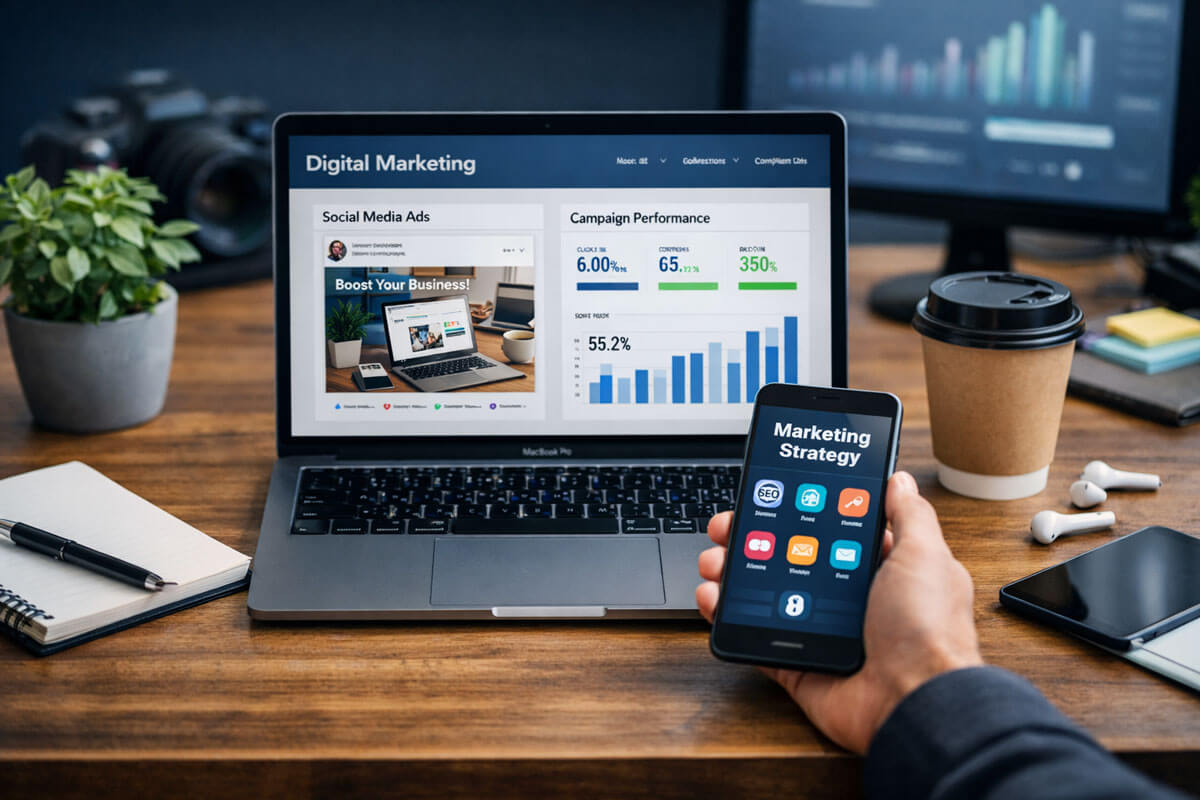



Although the way they work exclusively concentrates on exposure rather than conversions, many companies engage in digital marketing yet fail to see significant benefits. Building a comprehensive system that brings in, engages, and turns people into customers is the key to effective digital marketing, not running advertisements or posting content on social media.
Digital Marketing Starts With the Website (Not Ads)
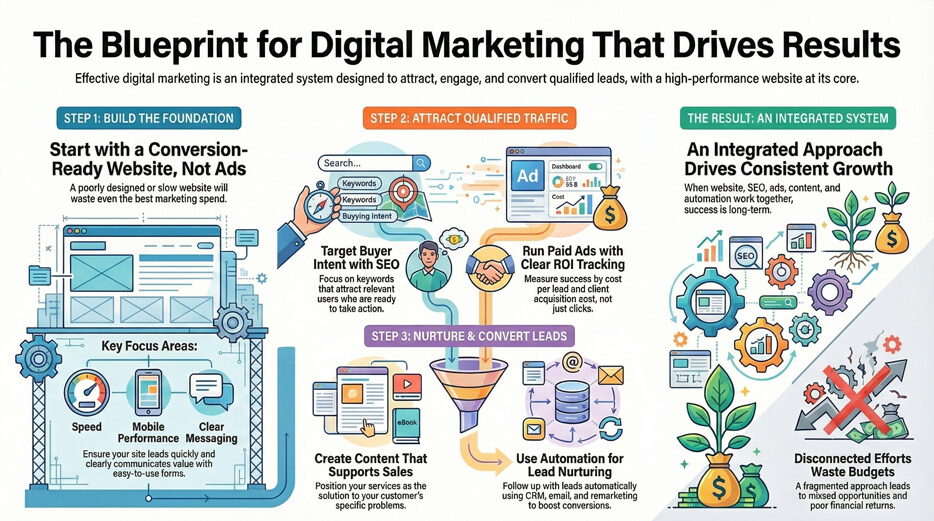
A conversion-ready website is the first step in a successful digital marketing campaign. Businesses should make sure their website loads quickly, functions seamlessly on mobile devices, and effectively conveys value before increasing traffic. Even the finest marketing spend can be destroyed by poorly designed websites, slow websites, or unclear call-to-actions.
Key focus areas:
-
Landing page structure and user flow
-
Clear service messaging and trust elements
-
Conversion-focused design and forms
SEO That Targets Buyer Intent, Not Just Keywords
SEO is effective only when it targets users who are ready to take action. Instead of ranking for high-volume keywords, modern SEO focuses on intent-based search terms that bring qualified leads.
This includes:
-
Service-focused keyword mapping
-
Location-based SEO optimization
-
Content built around customer problems
-
Technical SEO aligned with website performance
The goal is not traffic—it’s relevant traffic that converts.
Paid Marketing With Clear ROI Tracking
The best results from paid digital marketing come from tracking and optimizing each click. Successful advertising companies concentrate on performance indicators including cost per lead, conversion rate, and client acquisition cost.
High-performing campaigns rely on:
-
Audience segmentation and targeting
-
Landing pages matched to ad intent
-
A/B testing for creatives and copy
-
Continuous optimization using real data
Content Marketing That Supports Sales
Content is produced for more than just blogging; it helps with search engine optimization, establishes credibility, and helps people in making decisions. Strategic content presents your offerings as answers to actual consumer queries.
Effective content includes:
-
Service explanation blogs
-
Industry-specific use cases
-
Problem-solution based articles
-
SEO-optimized landing content
Marketing Automation and Lead Nurturing
The creation of a lead is not the end of digital marketing. Businesses may use automation solutions to follow up with prospective clients using CRM processes, emails, and remarketing advertisements.
This ensures:
-
Faster lead response times
-
Higher conversion rates
-
Better customer experience
-
Scalable marketing operations
Why Integrated Digital Marketing Works Best
When web development, SEO, content, paid ads, and automation work together, businesses see consistent growth. A disconnected approach leads to wasted budgets and missed opportunities. Integrated digital marketing aligns technology, strategy, and execution for long-term success.